

Warren McGee, Iconic Livingston resident and Lover of the Railroad, Memorialized in Bronze
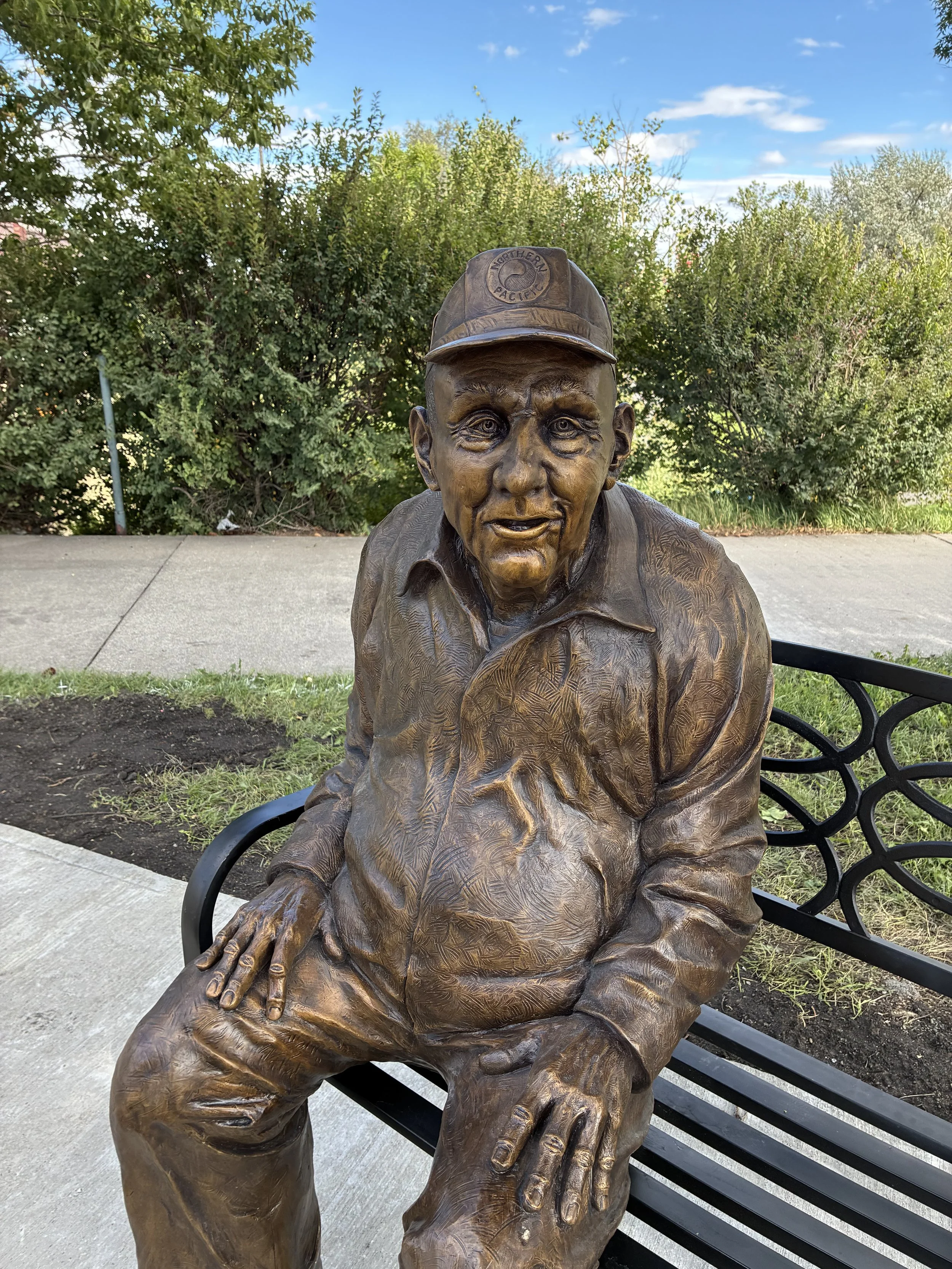
The new Warren McGee statue at Underpass Park in Livingston, Montana.
The sound of a passing train is as routine in Livingston as the persistent south wind, and for over a century Warren McGee watched those trains move through this small railroad town in Southwest Montana. As a lover of trains, conductor, and accomplished railroad photographer, it’s only fitting that a statue of Warren was erected sitting on a bench overlooking the rail yard where he can continue watching over the trains as they move through Livingston.
But who was Warren McGee? And why did generations of residents, family members, community leaders, and rail enthusiasts gather on September 2, 2026, to celebrate the unveiling of his likeness in bronze at Underpass Park in Livingston?
Who was Warren McGee?
Warren McGee was born in Livingston, Montana in 1914 when it was still a bustling railroad hub and travelers could change trains in Livingston, steam south to Gardiner, Montana and then hop into a stagecoach to see the wilds of Yellowstone National Park. As a third-generation railroader, Warren fell in love with trains by the time he was four years old. When he graduated Park High in 1933, he took any job he could find, including washing dishes for the hundreds of construction workers building the road that would become the Beartooth Highway.
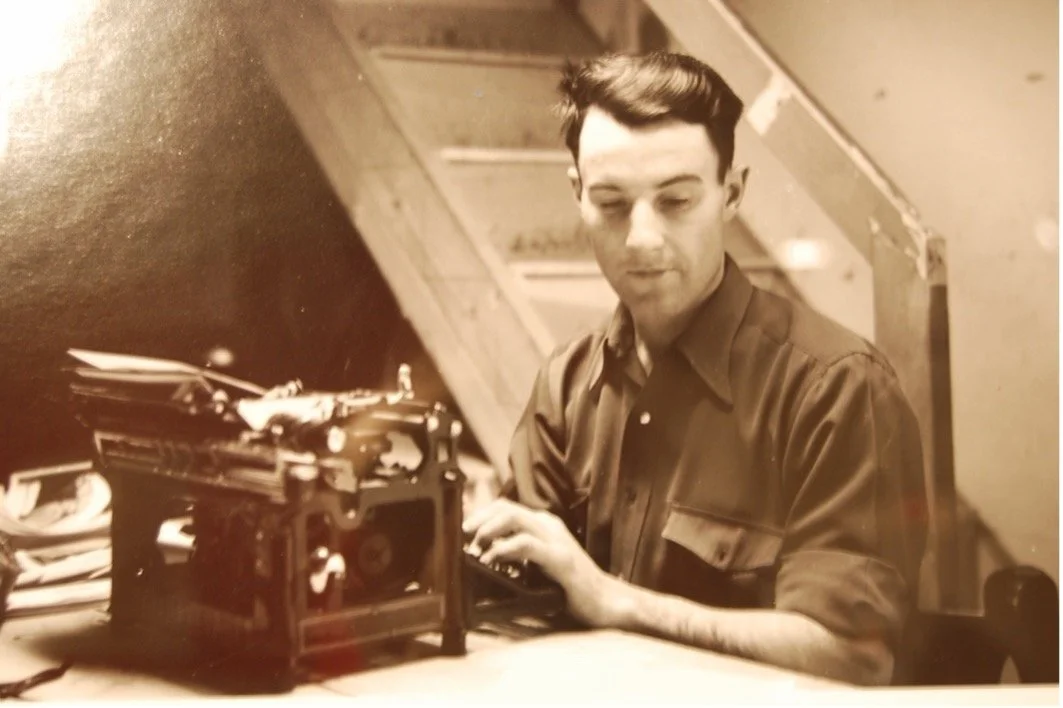
Warren McGee. Photo provided by the McGee family.
In 1936 he was hired by Northern Pacific Railroad as a brakeman and began his forty-year railroad career. When he was drafted into the Army Air Force in 1942, he went to the South Pacific and served in photo reconnaissance squadrons, using his existing photography experience to help win the Solomons and Marias campaigns during World War II.
When World War II was over, he returned to Livingston and his job at the railroad. McGee soon after met and then married his wife Bernice Lavold of Big Timber in 1946. Bernice gave birth to their son, Howard, in 1949 and they raised him in Livingston while McGee continued working as a brakeman and conductor. Tragically, Howard was killed in a car accident in 1971.
By 1948, regular passenger rail service to Gardiner was discontinued and then by the end of the 1950s the automobile replaced almost all passenger rail travel. That meant big changes were coming for Livingston and everyone working for the railroad at that time. To help fight for his fellow railmen and the town of Livingston, McGee served as the chairman of the Livingston Anti-Merger Committee for eleven years. The committee was formed to oppose the merger of the Northern Pacific, Great Northern, and Chicago, Burlington & Quincy railroads, and what that merger would mean for the rail shops that employed more than a thousand of McGee’s friends and neighbors. McGee and the committee took the fight all the way to the Supreme Court, where he testified.
Unfortunately, they lost their bid to stop the merger, but McGee did not lose his drive to make a positive impact on the people of Livingston and Park County.
He retired from the railroad in 1975 and dove deeper into his love of train photography, gaining national recognition with thousands of his photos published in books, magazines, and museums across the country.
One Man and An Outsized Impact
Over the next half-century of McGee’s life, he repeatedly brought people together to champion causes that improved Park County for future generations. That includes turning the old North Side School into the Park County Museum (now the Yellowstone Gateway Museum), helping to defeat the campaign to dam and flood Paradise Valley, and later saving and then serving at the Livingston Depot Center.
He was also an instrumental force in creating many of the iconic public spaces we know and love in Livingston. He helped to preserve Sacajawea and Miles Parks, dredge the lagoon, and plant and water 196 trees throughout the park. He even helped nurture the duck and geese populations that inhabit the parks today. His outsized impact on these beautiful greenspaces was honored when the street around Sacajawea Park was renamed McGee Drive.
In addition to many awards and accolades earned throughout his life, McGee and his wife Bernice were named "Livingston’s Citizens of the Year” in January 1980. To read more about his amazing life and impact, read his obituary here.
Coming Together to Honor Warren McGee
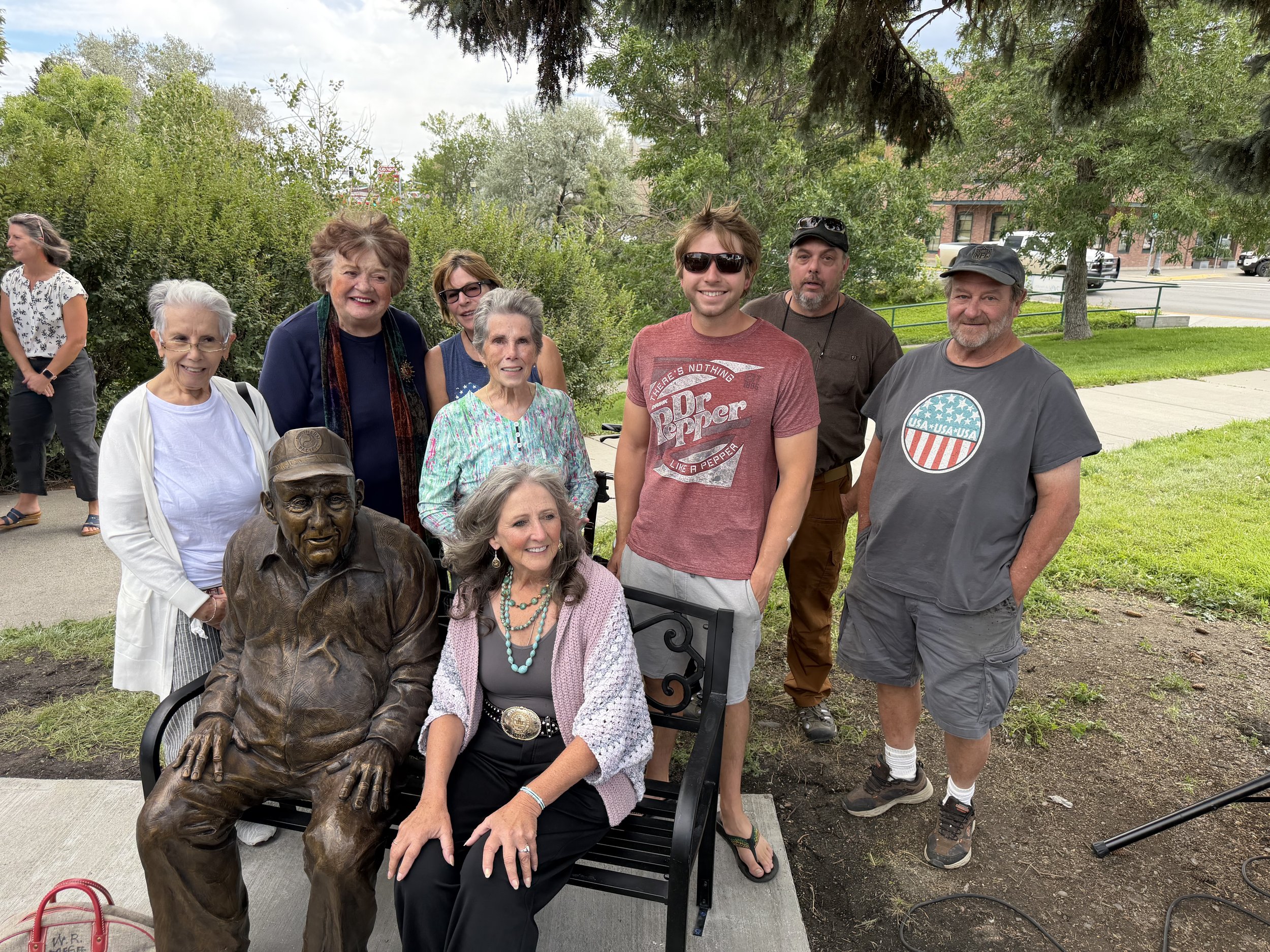
McGee family and friends gathered to dedicate the Warren McGee statue with artist Mary Michael (seated) and members of the Livingston Foundry (right).
Warren McGee passed away in 2017 after 102 amazing years. Before his passing, his friend Patricia Grabow began plans for a statue to honor McGee’s impact on Livingston. She contacted local artist Mary Michael to create a lasting tribute as she had done with her bronze statues of Sacajawea and baby Pomp in Sacajawea Park.
In the spirit of McGee’s collaborative work, many people and organizations came together to create the statue to honor him. Many of those folks were in attendance for the statue’s dedication ceremony at Underpass Park on September 2, 2026.
After years of work, the Warren McGee statue was made possible through a generous gift from the Dennis and Phyllis Washington Foundation and a multi-year partnership between the Livingston Depot Foundation, the Park County Community Foundation, the City of Livingston, and the Livingston Downtown Building Owners & Business Association.
On a sunny Montana fall afternoon, the statue was unveiled by McGee’s family surrounded by friends, railroad buddies, and leaders from the city and partner organizations, which were all invited to say a few words about the man’s enduring legacy. During those remarks, and in an all-too-appropriate twist of fate, the dedication ceremony was briefly drowned out by the roar of a passing train. Everyone in attendance agreed that McGee would have absolutely loved the moment.
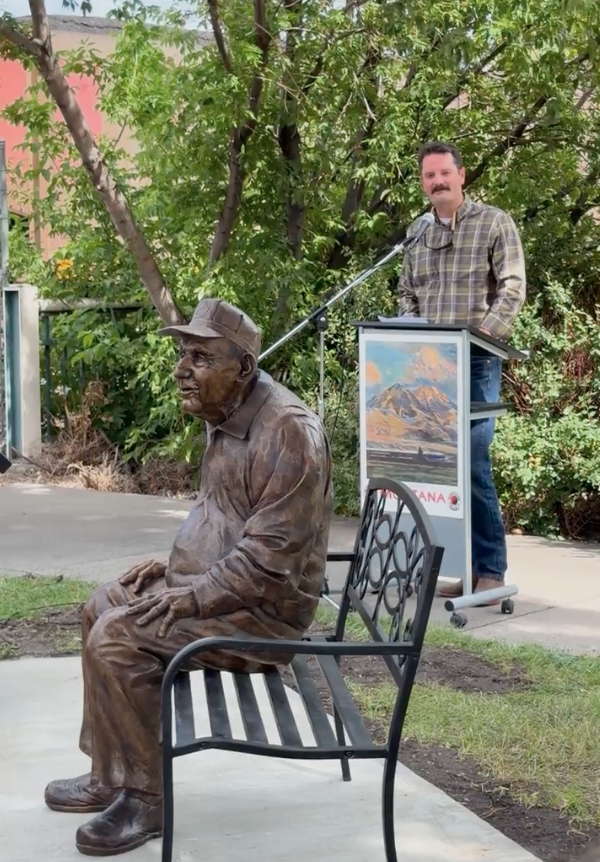
PCCF executive director Gavin Clark speaking during the dedication of the new Warren McGee statue.
With such an amazing life and impact on the people of Park County, it is no wonder why the community wanted to immortalize Warren McGee. Gavin Clark, PCCF executive director, said it best when talking about his legacy:
“There’s a phrase that we use in the Community Foundation of planting trees, of which we’ll never enjoy the shade of, and Warren literally did that 196 times. Not being able to enjoy that shade, but he knew that the work that he was doing would provide that for the future.
Warren’s legacy is what is embodied in this sculpture today. He showed us that generosity is not a single act, but a lifetime”
Thankfully, we now have a peaceful place to go take a deep breath and think while sitting next to a shining example of generosity. That is, as long as you don’t mind the sound of a passing train.